The smell hit her before she even flipped on the light — that stale mix of old grout, soap scum and something she couldn’t quite name. Emma stood barefoot in her bathroom, rubbing sleep from her eyes, staring at the yellowed silicone around the tub. She’d tried the fancy sprays, the eco-foam, even the “miracle” gel from a targeted ad. Nothing really changed, except her bank balance.
That morning though, a friend’s message popped up on her phone: “Have you tried baking soda with hydrogen peroxide? TikTok is obsessed.” Emma shrugged, walked to the kitchen, and came back with two humble bottles that had probably cost less than her last latte.
Ten minutes later, the grime started loosening like old wallpaper.
Something was going on with this simple duo.
Why experts are suddenly talking about this old-school combo
If you’ve felt like every cleaning product now smells like a perfume counter and comes wrapped in three layers of plastic, you’re not alone. More people are quietly going back to basics, and specialists are noticing. Baking soda and hydrogen peroxide — two everyday staples — are popping up together in dentist offices, dermatology blogs and even lab notes from materials scientists.
What used to be a grandma tip is now backed by growing lines of research across hygiene, home care and even food safety. That humble fizz when they touch? It’s part chemistry show, part real power.
One recent consumer study from a European research institute tracked the rise of homemade mixes in households over five years. The combo of baking soda plus hydrogen peroxide had one of the steepest climbs, especially among people under 40.
Some used it to brighten old tiles, others to freshen cutting boards that carried a faint onion-and-chicken memory no soap could erase. A dentist interviewed for the study mentioned seeing more patients asking, almost shyly, “Is that paste I saw online actually okay for my teeth?” Those conversations are pushing experts to speak up, clarify what works, and where the real risks begin.
On paper, the explanation is simple. Baking soda is a mild abrasive and a gentle alkali. Hydrogen peroxide is an oxidizing agent that breaks down into water and oxygen as it works. Together, they create a slightly foamy action that can lift stains, disrupt films of bacteria and loosen grime on many surfaces.
Reality is messier. Concentrations matter. Contact time matters. Your skin, enamel, grout and stainless steel don’t all react the same way. Specialists now repeat the same message: **this duo is powerful, but it’s not magic**. It behaves like a real chemical system, with all the responsibility that implies.
➡️ De nanny van de Prins en Prinses van Wales ontvangt een zeldzame koninklijke onderscheiding
From bathroom tiles to cutting boards: how to use it without regret
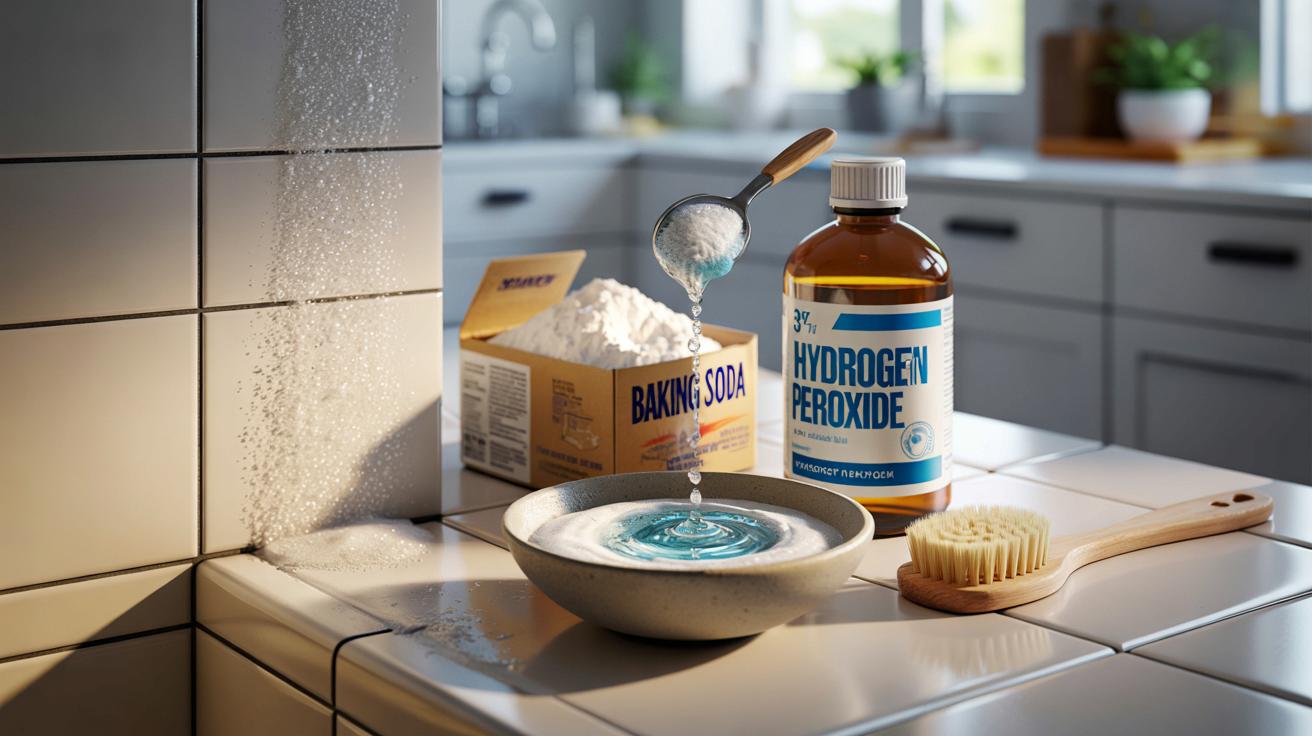
Start with the classic cleaning paste. In a small bowl, add 2–3 tablespoons of baking soda. Drizzle 3% hydrogen peroxide — the standard pharmacy kind — slowly over it, stirring until you get a spreadable paste, not a soup. It should hold on a vertical surface without dripping too fast.
Spread that paste over stained grout, the bottom of a burned pan (not aluminum), or the inside of a stained mug. Let it sit for 5 to 10 minutes. Then scrub gently with a sponge or soft brush and rinse thoroughly. Often the difference appears with that first wipe, which feels weirdly satisfying.
The same mix can rescue a plastic cutting board that has seen one curry too many. Coat the surface lightly, leave it for a few minutes, then scrub and rinse until no grainy residue remains. Many home cooks describe that moment when the lingering smell of garlic finally gives up.
We’ve all been there, that moment when you’re about to throw something out because it just looks “permanently dirty”. This paste gives you one honest last try before you bin it. Let’s be honest: nobody really does this every single day. It’s more of a monthly “reset” ritual than a daily habit.
Experts are quick to warn that the same paste people use on tiles is not a free-for-all cosmetic hack. Overuse on teeth, for instance, can erode enamel over time, especially if someone scrubs like they’re polishing a saucepan. Dermatologists also see patients irritated by homemade masks that stay on far too long.
“Baking soda and hydrogen peroxide can absolutely help in oral and skin hygiene,” notes Dutch dental researcher Marieke van Dijk. “The key is moderation, low concentrations and short contact times. It’s chemistry, not fairy dust.”
To keep things clear, professionals often sum it up in a simple mental checklist:
- Use low-strength peroxide (around 3%) for home care
- Reserve the paste for occasional use, not daily routines
- Test on a small, hidden area before attacking a large surface
- Keep away from aluminum and delicate, coated metals
- Never mix with vinegar, bleach or unknown products
A powerful duo, but not a life philosophy in a bottle
There’s something oddly comforting about watching this mix fizz on a grimy surface. It feels hands-on, almost like you’re undoing layers of neglect with a spoon and a bowl. At the same time, specialists keep repeating that this trend says as much about us as it does about chemistry. We’re reaching for simple tools in a world overloaded with options.
Some will use the paste once, post a before-and-after photo, and forget about it. Others quietly make it part of their cleaning or self-care rituals, finding a certain calm in knowing exactly what’s in the bowl. *That small sense of control, in a bathroom or kitchen, is not nothing.*
| Key point | Detail | Value for the reader |
|---|---|---|
| Safe starting ratio | Thick paste with baking soda and 3% hydrogen peroxide, short contact time | Easy, low-risk way to test the mix at home |
| Best uses | Grout, stained mugs, some cutting boards, occasional stain removal on non-delicate surfaces | Clear ideas on where this duo actually shines |
| Limits and risks | Can irritate skin, damage enamel and sensitive materials if overused or too concentrated | Prevents costly or painful mistakes while experimenting |
FAQ:
- Question 1Can I use baking soda and hydrogen peroxide to whiten my teeth every day?Experts strongly advise against daily use. Occasional, gentle use with very mild pressure might be acceptable for some people, but long-term daily use can thin enamel and increase sensitivity.
- Question 2Is this mix safe for all types of surfaces?No. It’s usually fine for ceramic, many plastics and some stainless steels, but it can react badly with aluminum and delicate coatings. Always test on a hidden spot first.
- Question 3Can I mix baking soda, hydrogen peroxide and vinegar together?Professionals say no. Mixing multiple reactive ingredients can neutralize their effects or create unwanted reactions. Use one method at a time, with a rinse in between.
- Question 4What strength of hydrogen peroxide should I buy?For home use, pharmacists and safety guidelines typically recommend 3% peroxide. Higher strengths are used in medical or industrial contexts and should be handled with specific training.
- Question 5Does this duo replace all commercial cleaners?It can replace some products for specific tasks, especially stain lifting and deodorizing. Still, **no single mix covers every need**, particularly when it comes to disinfecting high-risk areas or delicate materials.